

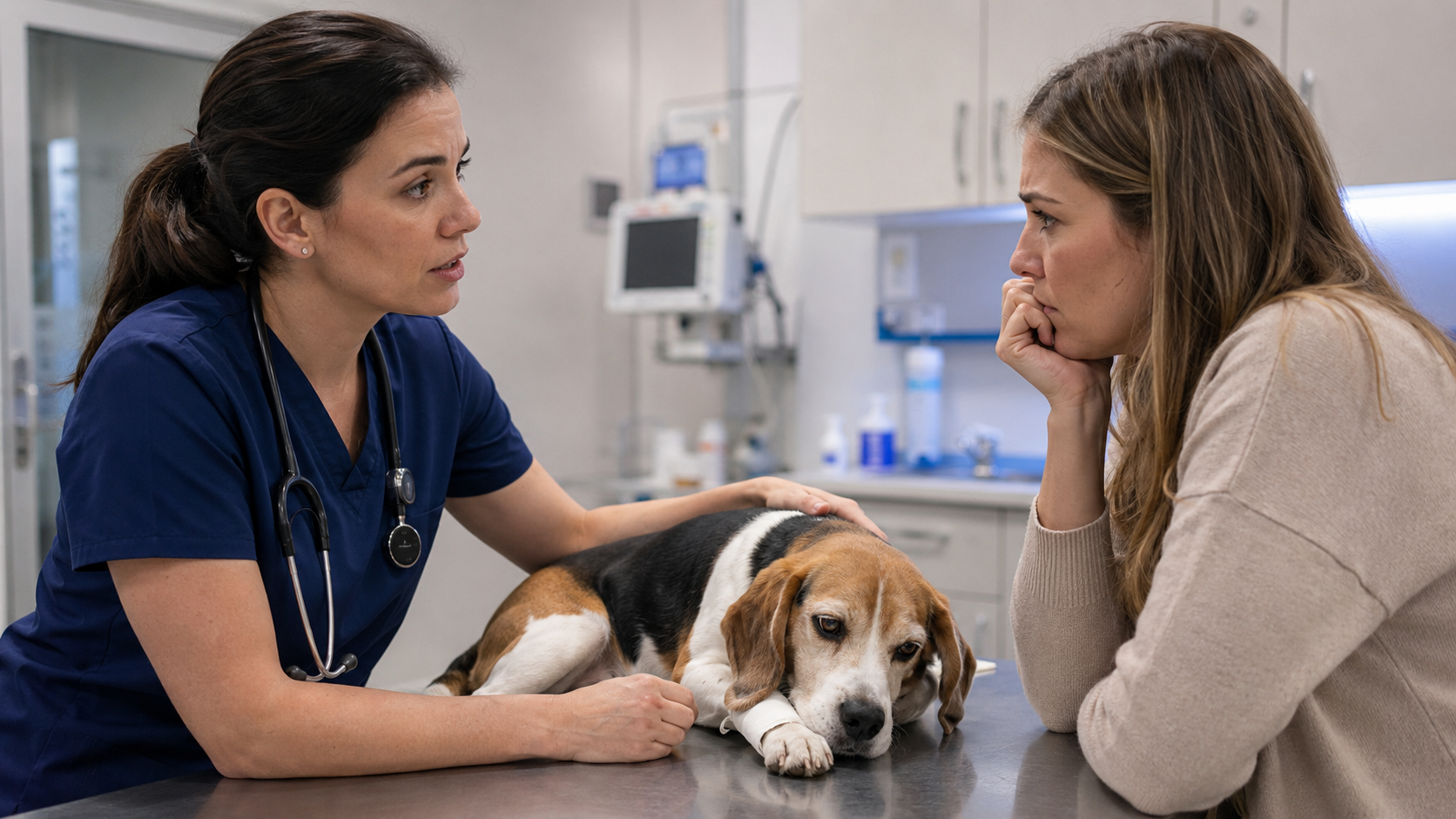
Pet emergencies have terrible timing, and your wallet usually gets no warning. If your dog suddenly starts retching at midnight or your cat cannot urinate, emergency vet costs can become part of an already stressful situation very quickly.
The good news is that the first number you hear from an emergency hospital is rarely the whole mystery. You can understand where your money goes by separating the exam, diagnostics, treatment, surgery, and hospitalization.
Current U.S. pricing from CareCredit puts the average emergency exam at $135 for dogs and $143 for cats. Those averages cover the exam itself, not everything your pet may need afterward.
The original draft correctly made that distinction and provided a useful foundation for the updated cost breakdown below.
Knowing the likely charges can help you ask better questions and plan for an unexpected bill.
Emergency Vet Costs: What You Can Expect to Pay in 2026
Your emergency vet visit cost starts with an emergency examination or triage fee. According to CareCredit’s May 2026 U.S. pricing data, the national averages are:
| Emergency exam | Average U.S. cost | Published range |
| Dog | $135 | $107–$246 |
| Cat | $143 | $113–$260 |
These figures are only for the initial ER exam. Your final invoice can include blood tests, X-rays, medication, fluids, oxygen, surgery, or hospitalization.
Location matters too. For example, CareCredit lists an average dog emergency exam of $108 in Mississippi, $180 in California, and $241 in Hawaii. That spread shows why a national average gives you a useful starting point rather than a guaranteed quote.
Why Your Emergency Vet Visit Cost Can Rise So Quickly
The exam fee gets your pet evaluated. The larger charges usually begin once the veterinarian needs to determine what is wrong.
A pet with a minor scrape may need wound cleaning and medication. A dog with repeated vomiting may need bloodwork, imaging, IV fluids, and observation. A cat that cannot urinate can need immediate testing, catheterization, medication, and hospitalization.
That difference explains why two pets entering the same emergency hospital can leave with very different bills.
Data from 341 submitted veterinary invoices offers useful real-world context. VetReceipt reports a typical emergency visit range of $500 to $1,600, with a median bill of $875 in its dataset. More complicated cases can climb far above that level.
So, when you call an ER and hear an exam price near $150, treat that figure as the opening charge rather than an estimate for the complete visit.
What Common Emergency Vet Tests Cost
Diagnostic testing can add several hundred dollars before treatment begins. These tests help your veterinarian understand what is happening inside your pet instead of treating symptoms blindly.
CareCredit’s current U.S. averages include:
| Diagnostic service | Dogs | Cats |
| CBC blood test | $104 | $79 |
| Chemistry blood panel | $164 | $144 |
| Emergency X-rays, 2–3 views | $334 | $310 |
| Ultrasound | $483 | $323 |
| Urine culture | $78 | $94 |
For example, your dog might need a CBC, chemistry panel, and X-rays during one visit. Using those national averages, those three services total about $602 before the exam fee or treatment.
You can ask which tests are essential immediately and which tests depend on the first results. Your veterinarian can explain how each diagnostic test could change the treatment plan.
Dog Emergency Vet Cost: Common Treatment Examples
Your dog emergency vet cost depends heavily on the problem being treated.
CareCredit’s published averages show how wide that range can become. Treatment for an abrasion or scrape averages $182 for dogs, while puncture-wound treatment averages $857. Severe diarrhea treatment averages $1,455.
Surgical procedures can add much larger charges:
- Bladder stone removal surgery: about $2,331
- Pyometra surgery: about $1,218
- Stomach blockage surgery: about $2,217
Those numbers do not mean every dog receives the same bill. Your dog’s size, condition, medication needs, complications, hospital, and geographic area can change the amount.
You may also see separate charges for anesthesia, imaging, medication, monitoring, and post-operative care depending on the hospital’s billing structure.
Cat Emergency Vet Cost: Why Certain Conditions Get Expensive Fast
A cat emergency vet cost follows the same basic pattern: exam first, then diagnostics and treatment based on what the veterinary team finds.
CareCredit lists a $143 national average for the cat ER exam. Several common treatments cost considerably more. Emergency bladder stone removal averages $2,096, pyometra surgery averages $2,116, and emergency stomach blockage surgery averages $2,367.
Urinary problems deserve special attention. Painful or blocked urination appears on CareCredit’s list of signs that call for immediate veterinary attention.
If your cat repeatedly enters the litter box without producing urine, cries while trying to urinate, becomes weak, or develops obvious pain, you should contact a veterinary professional immediately.
Cost should still be discussed, but delaying urgent assessment to search for the cheapest option can create additional medical risk.
How Much IV Fluids and Hospitalization Can Add
Your pet may need IV fluids after dehydration, vomiting, diarrhea, toxin exposure, surgery, or another serious medical problem.
CareCredit lists an IV catheter with one bag of fluid at an average of $130 for dogs and $121 for cats. Additional medication, fluid bags, lab monitoring, or extended therapy can raise that amount.
Hospitalization creates another major cost category.
At a veterinary clinic, CareCredit reports average overnight hospitalization of:
- $619 per night for dogs
- $582 per night for cats
Its emergency-clinic cost database lists even higher average hospitalization charges of $1,323 for dogs and $1,144 for cats.
A multi-day stay can therefore change your bill dramatically.
Ask what level of monitoring your pet needs, how frequently your pet will be reassessed, and when the veterinary team expects to review the treatment plan again.
What a 24 Hour Emergency Vet Cost Actually Pays For
A 24 hour emergency vet cost can seem high next to a daytime appointment. The services are different.
Emergency hospitals must maintain the staff, equipment, medication, laboratory access, and monitoring capacity needed for patients arriving at unpredictable times.
Your pet may need:
- Immediate triage
- On-site blood testing
- X-rays or ultrasound
- Oxygen support
- IV medication and fluids
- Continuous monitoring
- Emergency surgery
- Overnight nursing care
CareCredit notes that emergency veterinarians provide care for critical conditions and that ER visits may progress from triage into diagnostics, stabilization, and hospitalization.
This does not mean every charge is automatically necessary. You can still ask for an itemized estimate and request an explanation of each recommended service.
A good question is simple: “How will this test or treatment change the next medical decision?”
Emergency Vet Cost Without Insurance
Your emergency vet cost without insurance is generally paid directly by you. That means an unexpected four-figure estimate can create a cash-flow problem even when treatment makes medical sense.
Pet insurance can change your final out-of-pocket expense, yet many plans still require you to pay the hospital first and request reimbursement afterward. CareCredit specifically notes that most policies follow this structure. Pre-existing conditions may not qualify for coverage.
Pet insurance has become increasingly common. The North American Pet Health Insurance Association reports that 7.6 million pets were insured across North America at the end of 2025, up 8.5% from 2024.
Coverage still has limits. Your deductible, reimbursement percentage, annual maximum, exclusions, waiting periods, and exam-fee coverage can all affect what you eventually pay.
Read the actual policy terms before relying on insurance during an emergency.
Emergency Vet Payment Plans and Other Ways to Manage the Bill
Searching for emergency vet payment plans during a crisis can add another layer of stress. You can make the process easier by learning your nearby hospital’s payment policy ahead of time.
Start by asking for a written estimate. The hospital may divide recommendations into immediate stabilization, diagnostics, and treatments that follow once results are available.
You can then ask:
- Is a deposit required before treatment?
- Which charges are urgent right now?
- Can the treatment plan be completed in stages?
- Does the clinic accept third-party financing?
- Does your insurance provider offer direct payment?
- Can you receive an updated estimate if the plan changes?
CareCredit lists emergency savings, financing, and pet insurance among the options pet owners can explore in advance.
Financing still creates debt, interest, or repayment obligations depending on the product. Review the terms carefully before agreeing.
A Real-World Look at Emergency Bills
Published averages tell you what individual services may cost. Actual invoices help show how those services stack together.
VetReceipt’s 2026 emergency-vet dataset contains 341 submitted invoices. Its reported median is $875, while its typical range runs from $500 to $1,600. The site also reports that the highest-cost cases commonly involve surgery or overnight care.
That real-bill perspective explains an important limitation of simple cost guides.
An exam average of $135 or $143 can be accurate at the same time that your complete invoice reaches $800, $2,000, or considerably more. The exam measures only one line on the bill.
You should therefore use published pricing to build a budget range, not to predict the exact invoice for your pet.
When Cost Research Should Stop and Veterinary Care Should Start
Comparing prices makes sense when you have time. Some symptoms call for immediate professional guidance.
CareCredit advises contacting a veterinarian for signs such as difficulty breathing, severe bleeding, fractures, heatstroke, toxin or foreign-object ingestion, loss of consciousness, seizures, a bloated stomach, or painful or blocked urination.
If you suspect poisoning, ASPCA Poison Control operates 24 hours a day, 365 days a year at (888) 426-4435. A consultation fee may apply.
You can still ask about costs once your pet has been assessed. Medical urgency simply changes the order of your decisions.
Your first question becomes, “What does your pet need right now?” Your next question can be, “What will that care cost?”
How You Can Prepare for an Emergency Vet Bill
You cannot predict every accident, but you can remove several financial surprises before one happens.
Keep the phone number and address of a nearby emergency hospital in your phone. Ask the hospital about its exam fee, payment policy, and financing options during a calm day.
Then consider building a dedicated pet-care fund. The right target depends on your budget, local prices, insurance coverage, and your pet’s health risks. Avoid assuming one savings number works for every household.
If you have pet insurance, keep a copy of the policy details accessible. Know your deductible, reimbursement percentage, annual limit, exclusions, and claims process.
Finally, ask for estimates during treatment when your pet’s condition allows it. An estimate gives you a clearer view of what is happening now and what may come next.
A little preparation cannot remove the stress of an emergency. It can give you more useful options when every decision suddenly feels expensive.
The Bottom Line on Emergency Vet Costs
Emergency veterinary bills can look confusing because the exam fee receives most of the attention while diagnostics and treatment create much of the final expense.
For 2026, CareCredit reports average U.S. emergency exam costs of $135 for dogs and $143 for cats. Bloodwork, X-rays, fluids, hospitalization, and surgery can quickly move your total into the hundreds or thousands of dollars.
You can make the process easier by knowing your closest emergency clinic, understanding your insurance, building savings, and requesting clear estimates when circumstances allow.
Most importantly, do not let a cost article replace medical advice when your pet shows signs of a true emergency. Contact a veterinary professional, get the immediate problem assessed, and then work through the financial options one step at a time.